Asset History Report, for homeowners
Know your home. Keep its history.
Understand what is in your home, what work has been done and what costs may be coming. Keep the documents, service history and important details together as your home changes. The record stays with the house.
$29.99 a year for one home, billed once a year. Cancel any time.

What makes it different
Your home gets its own record, and the record stays with the house.
This is not a folder of files to keep track of. Your home has one continuing record, and the furnace, water heater, roof and windows are each part of it. Every repair, upgrade, warranty and document is connected to the system it belongs to, so the story holds together through new contractors and new owners.
- The home and its systems have their own identityOnce a document identifies them, your home and its major systems are given Harmelo record numbers, so the furnace's history stays with that furnace. These are Harmelo's own record numbers, not a land title or a government registration.
- Everything stays connectedEquipment, maintenance, upgrades, warranties and documents are filed against the system they belong to, with where each fact came from.
- Everyone adds to the same recordContractors you invite file their visits to it, signed. You decide who can write to it.
- It can go to the next ownerWhen you sell, you review what goes, invite the buyer by email, and the record moves to their account when they accept. How a transfer works

What your home is telling you
If you take care of your home, the record should show it.
- Know what needs attentionService that is due, warranties about to end and systems getting older, in one list.
- Find warranties and documentsKept with the furnace, roof or water heater they belong to, ready when you need them.
- Plan for future replacementsRoughly when the big systems may need replacing, and roughly what it may cost.
- Keep a history of completed workEvery repair, upgrade and service visit, with who did it and what it cost.
See your home in Asset History Report
Look around a sample home.
Real screens from the product, shown for a sample home. Pick a part of the record to see it.
My home
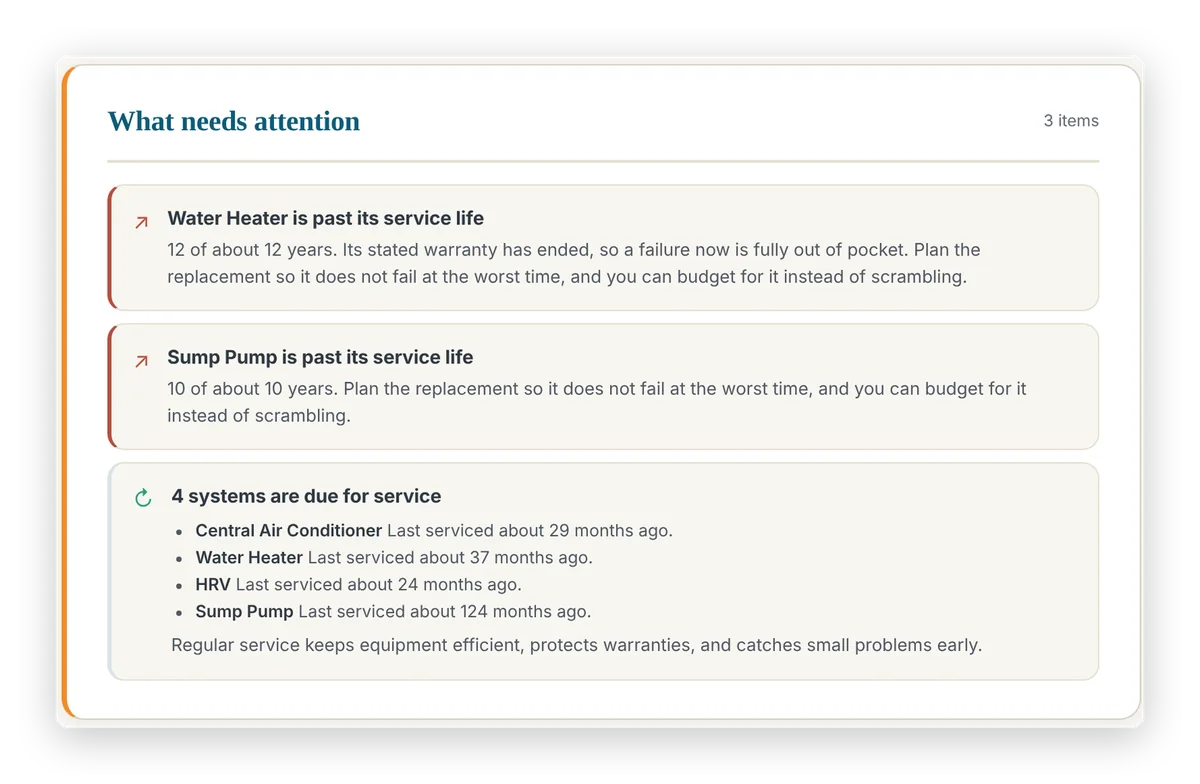
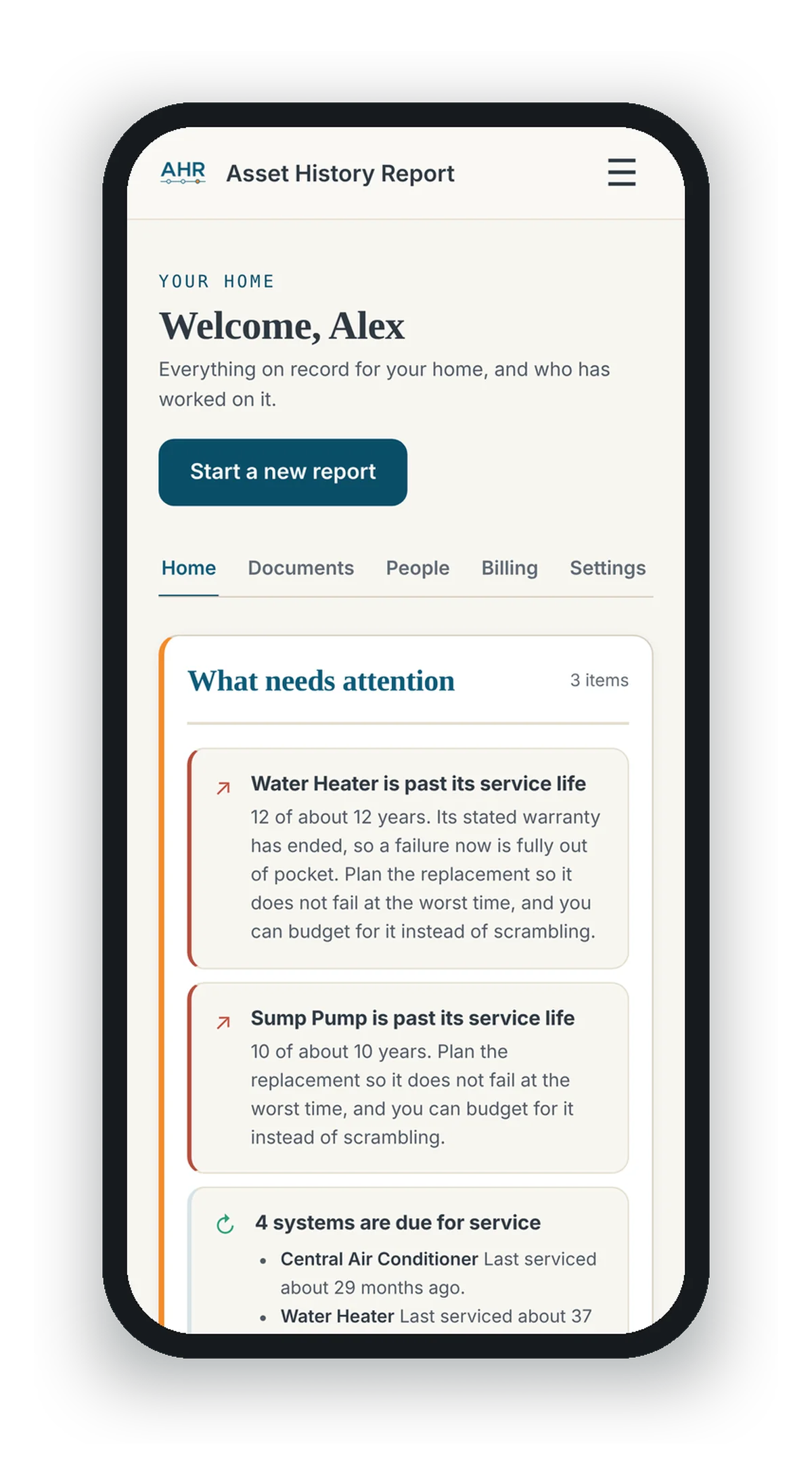
- What you see
- What needs attention now and what is coming up, across every system.
- Why it helps
- You spend a minute on the house, not an afternoon looking for paperwork.
- What it rests on
- Your documents, your contractors' visits and the install dates on record.
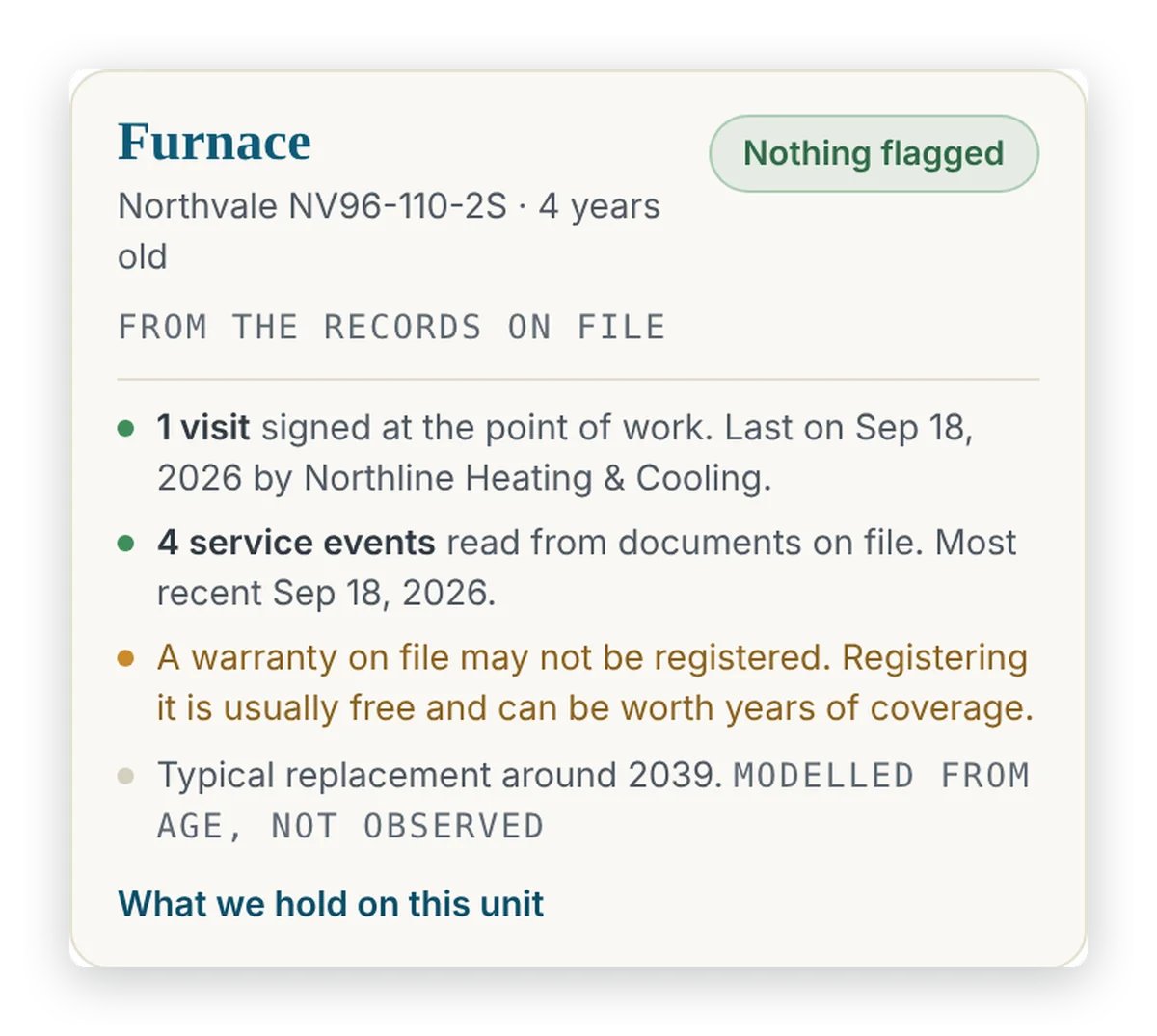
My systems
- What you see
- Each system with its make, model, install year, service and warranty.
- Why it helps
- The next contractor starts from what is known instead of guessing.
- What it rests on
- Invoices, permits and warranties; what you add yourself is marked as yours.
Maintenance history
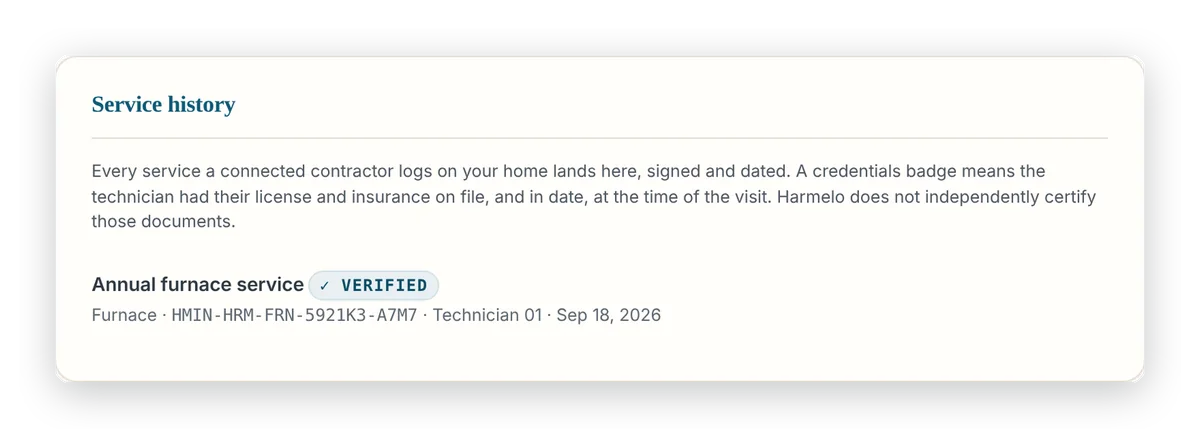
- What you see
- Every visit, dated, with the company that did it and what was done.
- Why it helps
- Changing contractors no longer means losing the history.
- What it rests on
- Visits your contractors file and the invoices you add.
Planning ahead
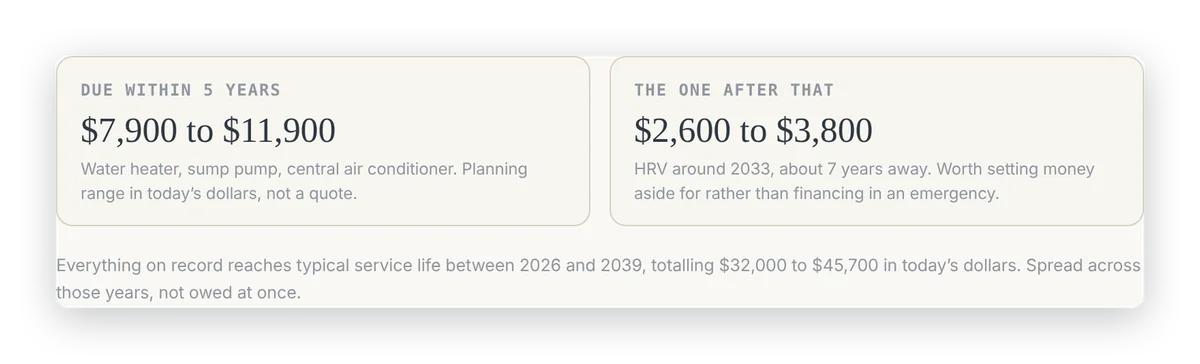
- What you see
- Planning ranges for the big replacements over the next three and ten years.
- Why it helps
- A replacement becomes a planned decision rather than an emergency.
- What it rests on
- Install dates and typical service life. Not quotes and not predictions that anything will fail.
Documents and warranties
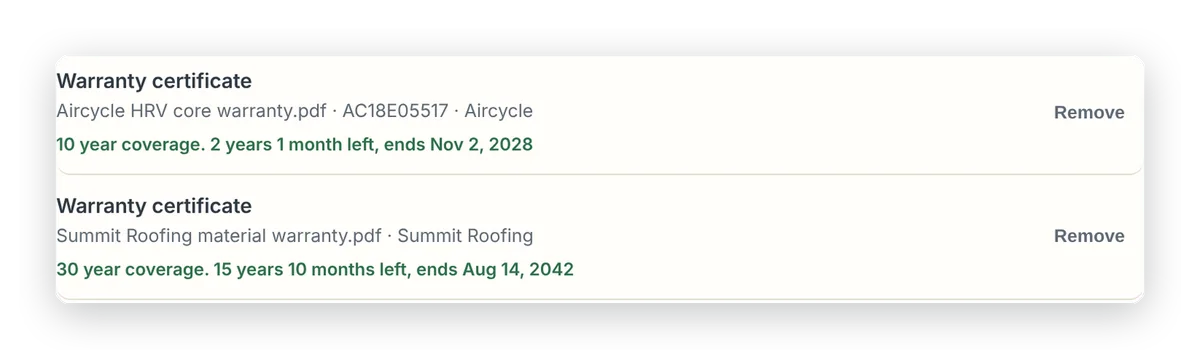
- What you see
- Each warranty with the system it covers and when it ends.
- Why it helps
- When something breaks, you know where the paperwork is and whether it is still in its term.
- What it rests on
- The warranty documents you add. The terms are the manufacturer's; the record does not decide a claim.
See everything a membership includes or view a sample report.

How easy it is to start
Start with what you have. It does not need to be complete.
- Create your home record.An account and your address. That is the whole first step.
- Add what you know, or upload what you already have.Photograph a furnace label, type in what you remember, or add a few invoices. Blanks are fine.
- Keep building the history over time.Add the next invoice when it arrives, and invite your contractor to file their visit.
You do not need every receipt or every model number. A rough year is more useful than nothing, and anything missing is shown as missing, so you know what to look for.
Your home, your control
Everyone who works on your home adds to it. You get all of it.
You decide who can write to your record, and you can revoke that access at any time.
- Professional access is yours to giveA contractor or agent reads or adds to your record only with your permission.
- Every entry shows where it came fromA visit filed by a contractor, a fact read from your invoice, or something you added yourself.
- You see what goes with the houseYour account details never move with the house. Documents you file against the home do, and before you send them you review each one, because an invoice can show your name or address.
Everyone contributes. Everyone benefits. The history stays with the property.

Plan for what comes next
Plan before it becomes an emergency.
Most homes have a few large replacements coming over the next decade. Knowing roughly when, and roughly what, turns a January emergency into a spring decision.
- Maintenance dueWhat is due next on each system, from its service history.
- Replacement windowsWhen each major system may need replacing, as a range with its basis.
- What you have actually spentThe real spend on your home, from your own invoices, system by system.
- A monthly amount to set asideSo a replacement is budgeted, not financed in a hurry.
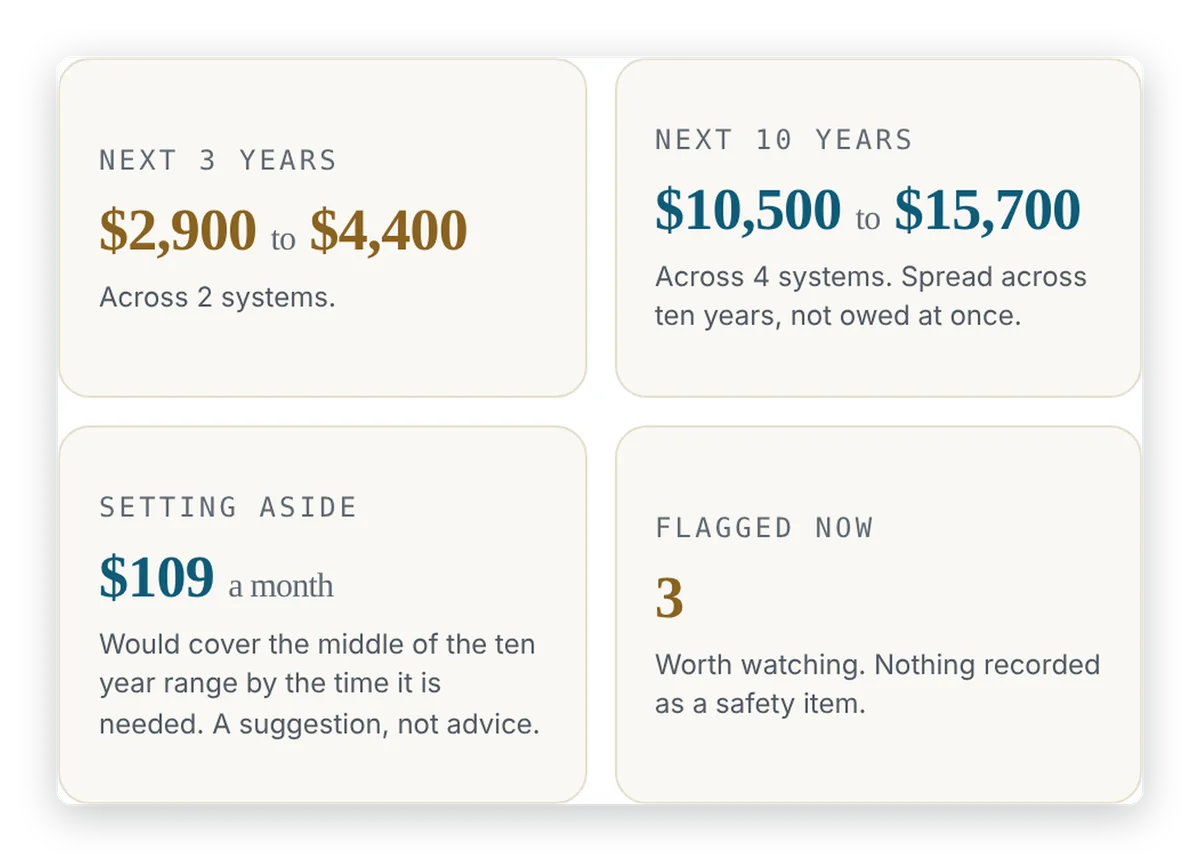
Planning ranges in today's dollars, from install dates and typical service life. Not quotes and not predictions that anything will fail. Review them alongside professional advice.
The story stays with the home
Leave the next owner more than the keys.
Years of care should not disappear when the house changes hands, or when the contractor does. Pass on the history of the home you looked after, so the next owner does not have to start from zero.
- YouKeep the systems, visits, upgrades and paperwork in one record.
- Your contractorsAdd their work as they go. A new one starts from the history, with your permission.
- The saleYou review the documents that go, then invite the buyer by email.
- The next ownerAccepts, and receives the home's documented history, not a shoebox of receipts.
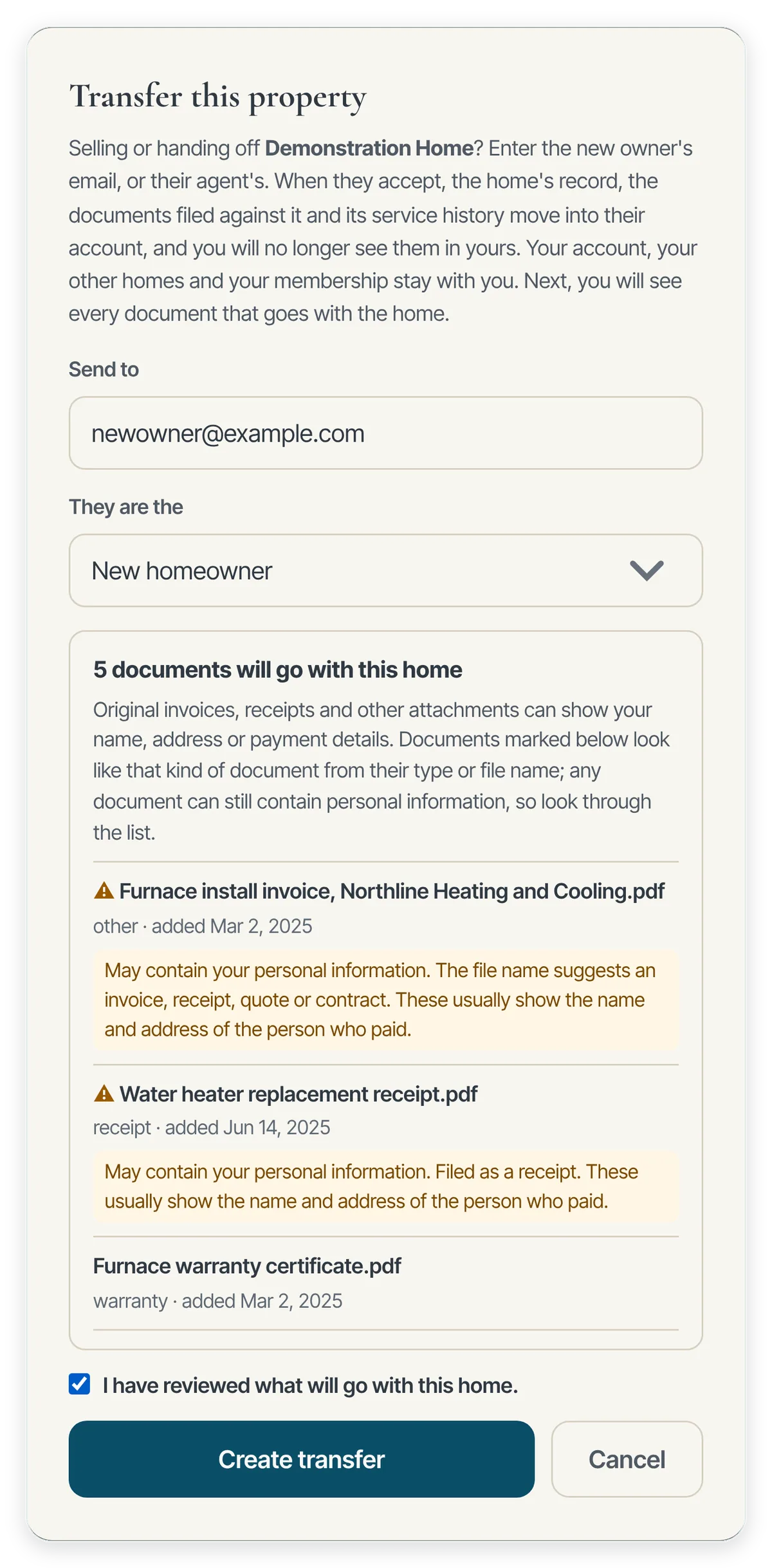

How a transfer works
- You review what goes.Every document filed against the home is listed, and the ones that may show your name or address are marked. Nothing is sent until you confirm.
- You invite the new owner.The invitation works only for the email address you enter, only once, and it expires after 7 days.
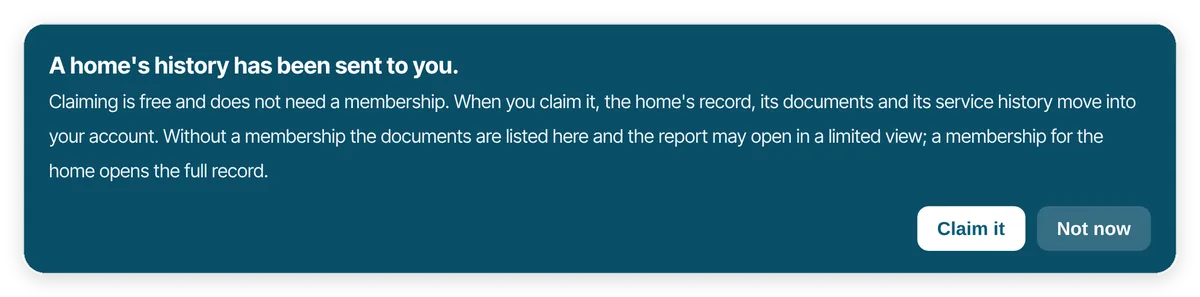
- They accept.Accepting is free and does not need a membership. The home's record, its documents and its service history move to their account and leave yours.
- It is recorded.Harmelo keeps a record of who sent it, who accepted it and which documents moved.
- Maintenance that counts after youEvery tune-up and repair stays on the home's record through the sale.
- Upgrades stay documentedThe new roof, the heat pump, the water heater you replaced early: what, when, by whom and what it cost.
- Warranties and documents stay connectedKept with the system they belong to, so the next owner knows what is still covered.
- You see what goes with the houseYour account details never move with the house. Documents you file against the home do, and before you send them you review each one, because an invoice can show your name or address.
A new owner without a membership sees the transferred documents in their account, and the report may open in a limited view. A membership for the home, $29.99 a year, opens the full record and keeps it current.